
I've sat in rooms with executives from some of the largest organizations in the world, and I keep running into the same mindset: very few enterprises are willing to run an A/B test.
They think it's a waste of time. They think it takes too much effort for something that might not even work. Underneath that, there's usually a quieter assumption. Everything is working fine. We're a big brand. People know us, they'll apply anyway. Why test?
That assumption is one of the biggest sources of quiet budget leakage in the corporate world.
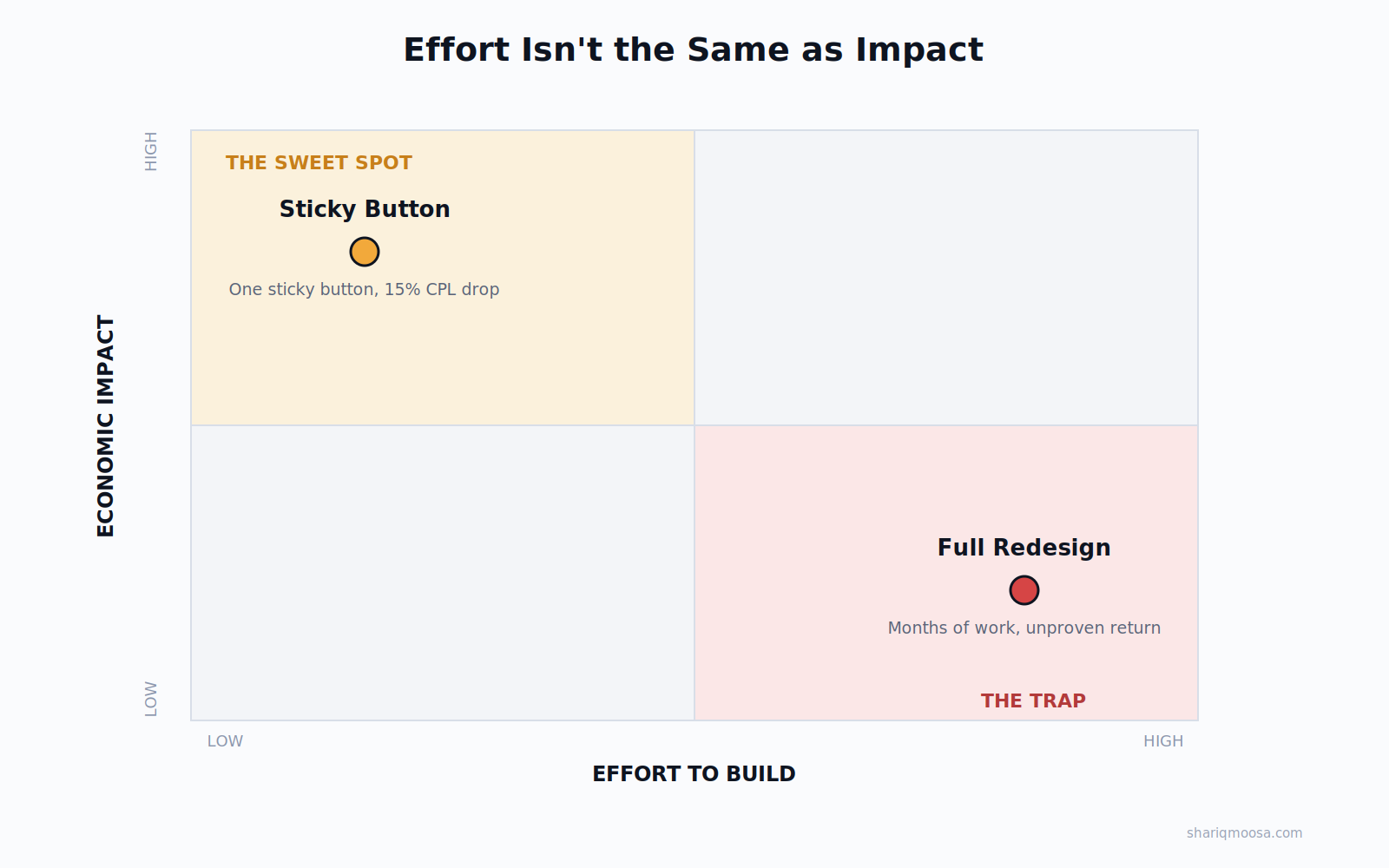
There's a deeper flaw underneath that assumption. Enterprise leaders consistently underestimate small changes because they evaluate the effort required instead of the economic impact generated.
Here's the part most enterprises miss. A/B testing is actually easier for them than it is for a company with no traffic, not harder. One of the biggest banks in the region is running tests right now, recommended by their agency, because the people advising them understand exactly how volume works. When you're generating a million dollars a month from a product line, even a small shift in conversion isn't small. It's a number you can calculate, and it's a big one.
That's what makes enterprise the best place to test, not the worst. Bigger audience, bigger revenue base, faster path to a result that matters.
And yet enterprise is usually the last to try it. I recently sat down with executives at a major real estate developer who don't test at all. They believe their current setup is already the best it can be.
So I told them a story from my time leading digital analytics.
The sticky button
Years ago, while running digital analytics for Emaar, I ran a simple test. We made the CTA button sticky. At the time, that wasn't even a standard concept.

It was a massive winner. Cost per lead dropped 15%. Emaar kept it. If you look at their site today, that sticky button is still there.
I told that same story to another major developer in the region. Their reaction: "that's just a small change."

Arguing about the wrong thing
Here's what actually happened in that room. They were focused on the size of the change, one button, made sticky. I was focused on the size of the result, 15% off cost per lead.
I got pulled into their frame. Instead of holding my ground on the number, I found myself defending the button. Whether that was the moment getting to me or just me not articulating it well enough, the conversation became about how small the change looked instead of how big the result was.
That's the real articulation problem in digital analytics. Executives get anchored on the mechanics of the change instead of the margin it produces.
Translating mechanics to margin
If an executive calls your test result "a small change," stop defending the mechanics. Reverse-engineer their own budget instead.
I don't look at a sticky button. I look at the 15% CPL reduction.
Say your enterprise is spending AED 1,000,000 a month on digital ads. A 15% improvement in CPL efficiency on that budget represents AED 150,000 in potential monthly savings, the same number of leads for meaningfully less spend.
That's not a small change. That's AED 150,000 a month in potential savings, recovered from a UX decision most teams would never think to test.
The point
If you're running an enterprise, a CMO, a CTO, a CEO, the message is simple. If you don't challenge your own setup, your competitors already are. Testing isn't optional once you've decided you've already won. That belief is exactly what stops you from finding the next 15%.
The moment a company stops testing, it starts guessing.
Stop assuming. Start testing.